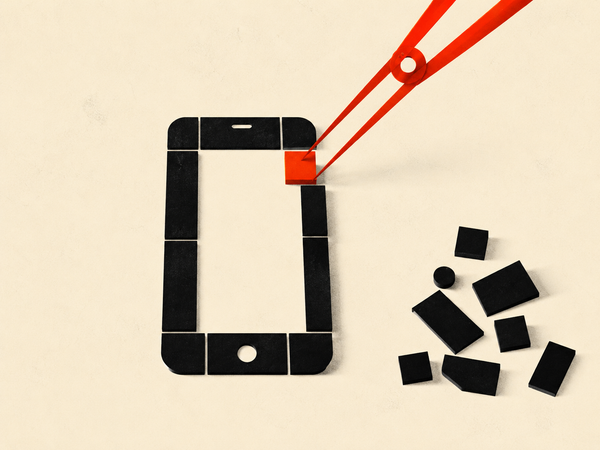
The mobile engineering team is now software

Anthropic is hiring engineers. The headlines say engineers are dead. Both are true.
Anthropic is hiring software engineers.
Open jobs. Right now. You can go look.
OpenAI is hiring software engineers. Cursor is hiring software engineers. The AI labs whose entire product is automating software engineering cannot hire engineers fast enough.
Meanwhile the headlines say engineers are dead.
Salesforce paused engineering hires. Meta said AI will replace mid-level coders. Google asked twenty thousand people to leave. McKinsey hired ex consultants to train AI on entry level consulting work.
Both of these things are true at the same time.
The engineer is dying. The engineer is being hired faster than ever. Both. Simultaneously.
The gap between those two sentences is interesting.
The contradiction
If AI were genuinely replacing engineers, the AI labs would be the first to need fewer of them.
They have the best AI. They eat their own dog food. The engineers there are using Claude and Codex and Cursor more than anyone else on earth.
They're hiring more engineers. As fast as they can.
So engineers aren't dying.
Something else is happening.
The shape of the job is changing underneath the title. What an engineer at Anthropic does in 2026 is not what an engineer at a typical SaaS company did in 2018.
The work moved up the stack. The questions got bigger. The implementation work got smaller.
Typing, boilerplate, routine ticket work. That's AI's job now. Or it's a junior with AI tooling that compounds them ten times.
Senior engineer time is now spent on what AI cannot do.
Which turns out to be a lot.
Same thing is happening to the way you buy engineering
If the engineer is being transformed, everything downstream of the engineer is being transformed too.
How founders think about hiring engineers. Transforming.
How teams budget for engineering. Transforming.
How buyers compare in-house versus outsourced. Transforming.
How agencies sell engineering. Transforming.
I ran Vermillion as a mobile development agency for fifteen years. The frame stopped working sometime in the middle of 2025.
Not the work. The frame.
Buyer would come in. They'd just read three articles about AI replacing their engineering team. They'd just looked at Cursor pricing at twenty bucks a month and asked themselves whether they need an agency at all when AI can ship. They'd just had a board meeting where someone asked why they're paying $25K a month for a vendor when their competitor is shipping with two interns and Claude Code.
I'd be on the discovery call pitching embedded React Native engineering for marketing-first subscription app teams.
The pitch wasn't wrong.
It was the wrong shape.
The buyer wasn't asking what kind of agency. They were asking what an engineering team even is anymore.
Different question. Needed a different answer.
What YC just named
A few weeks ago, Y Combinator put out their Spring 2026 Request for Startups.
Item three: AI-Native Agencies.
Their words. Agencies have always been hard to scale. AI flips this model by letting firms use software internally to deliver finished work at higher margins, turning agencies into software-like businesses.
Then YC partner Gustaf Alströmer for Summer 2026. Sell the service, not the software.
His pitch. Services spend is many times larger than software spend. Most services are already outsourced, which makes them structurally easier to replace than incumbent SaaS.
His exact words. Historically, services became SaaS software. More recently, they became AI copilots.
Now AI is becoming the service itself.
Read that arc twice.
Services became SaaS. SaaS became AI copilots. Now AI is becoming the service itself.
The most influential signal-setter in the startup ecosystem just publicly asked founders to build the thing.
The category has a name now.
Service as software.
What the function actually is
The mobile engineering function is the team that owns the codebase. Architecture decisions. Release process. Subscription infrastructure. RevenueCat webhook handlers. StoreKit 2 transaction listeners. The on-call phone. The diligence room.
Continuous responsibility, not a list of features.
It's not commoditized by AI for three reasons that aren't about AI's capability.
- AI cannot own a multi-year relationship with a codebase. Stateless across the arc.
- AI cannot take accountability. When the App Store rejects your binary at 3am, someone has to pick up the phone. When the webhook drops an event, someone is on the hook. When the diligence team asks who's responsible, there's a name.
- AI does not have a relationship with your business. It doesn't know that this paywall experiment matters more than that one because of the board meeting in three weeks.
These aren't gaps that close. They're structural.
The shops that won't survive the next few years are the ones whose only product was implementation.
The ones that survive are the ones whose product is everything implementation isn't.
Housekeeping
This newsletter has been called The Runway Report. As of today it's Cold Start.
Cold start is a real engineering term. Time from tap to interactive UI. Good teams under fifty milliseconds. Bad teams live in the seconds. Every mobile engineer knows what it means.
Every startup is also a cold start. The first hundred days of a new engineering function are the same problem. Snap to interactive or stall.
If you were on the Runway Report list, you're on Cold Start. Nothing to do.
If you're not, vermillion dot agency. Free.
What this is
Field notes from inside one company trying to figure out what an agency is when AI is becoming the service.
Some issues will be tactical. Week by week walkthroughs of what shipping a paywall experiment looks like in 2026. What due diligence reviewers actually look for. What breaks in RevenueCat at 100,000 subscribers.
Some issues will be frame-setting like this one.
Some will be field notes from real engagements. Interesting things we ran into. What we learned. What we're changing.
The through-line is what an engineering team is in 2026 versus 2018. Why the hiring math broke. What's being born to replace what broke.
Take what's useful. Leave what's not.
- Ken